Commissioning a luxury web design agency for a 3D interactive site is a business-critical decision for premium brands in 2026. See our portfolio →
What Sets a Luxury Web Design Agency Apart in 3D Website Projects
Commissioning a luxury web design agency for a 3D interactive site is a business-critical decision for premium brands in 2026. Beyond paying for aesthetics, buyers must weigh technical depth, domain fluency, and the agency’s commitment to delivering bespoke, high-performance digital experiences. Many agencies claim luxury, but only a select few operate at the intersection of artistry, engineering, and compliance. The real distinction is not just visible in the portfolio, but in the methods, team structure, and long-term support that underpin each project’s success.
Defining a Luxury Web Design Agency in the 3D Era
In 2026, what qualifies as luxury in web design has evolved. No longer is it enough to deliver a sleek homepage or clever transitions. For brands in fintech, SaaS, luxury consumer goods, and other high-value verticals, luxury means a holistic digital experience that extends from the first animation to backend reliability, accessibility, compliance, and post-launch iteration.
Luxury web design agencies distinguish themselves through:
- Original 3D assets and scenes, crafted in-house by multidisciplinary teams
- Seamless integration of UI, UX, and 3D interactivity, tailored to the brand’s unique narrative and user base
- Proactive risk management for performance, accessibility, and regulatory compliance from the outset
- Direct access to senior creative and technical leaders, not just account managers
- Commitment to rapid prototyping using advanced tools like Three.js and WebGL, accelerating stakeholder feedback and de-risking innovation
Agencies at this level use dedicated internal pipelines for design and development, often built around collaborative iteration between designers, 3D artists, and engineers. Rather than relying on templates or pre-made asset packs, they deliver custom environments and interactions that reinforce brand identity and meet the rigorous expectations of high-end audiences.
When evaluating partners, insist on viewing not just static screenshots but MDX 3D and interactive web project examples: live demos that perform across devices and showcase the agency’s technical and creative range.
Related decision: To understand typical investment levels and what constitutes appropriate scope for high-end projects, see the latest 2026 3D Website Development Cost benchmark.
Key Differentiators: What Makes a Luxury 3D Web Project Stand Out
The true luxury web design agency differentiates by process, depth, and discipline, not just polish. These agencies rarely use off-the-shelf themes or generic code libraries. Every component, from 3D models to microinteractions, is custom-built for the brand’s vision and the end user’s journey.
Key differentiators include:
- Integrated teams: Cross-functional squads combine 3D artists, performance engineers, UX strategists, and industry consultants. This ensures that creative ambition is grounded in technical feasibility and user needs.
- Performance-first engineering: Luxury agencies benchmark experiences across mobile, tablet, and global network conditions. They employ progressive loading, asset compression, and animation tuning to guarantee real-time responsiveness, even on less powerful devices.
- Rapid prototyping: Many luxury agencies maintain proprietary pipelines for building and sharing interactive 3D prototypes within days. This supports agile feedback and iteration, reducing the risk of late-stage surprises and costly rework.
- Domain expertise: Top agencies understand regulatory, UX, and compliance requirements for high-stakes sectors like fintech or SaaS. They embed these needs into the project from the first sprint, not as afterthoughts.
- Transparent support and iteration cycles: Rather than treating launch as the finish line, luxury agencies offer detailed post-launch support, analytics, and iteration plans, ensuring the site evolves as the brand grows.
For example, a luxury agency working with a fintech brand may deploy real-time 3D data visualizations that remain accessible and performant across markets. In high-end consumer, immersive product explorers may integrate smoothly with e-commerce flows while maintaining sub-second load times. These are not theoretical standards, they are table stakes for true luxury projects.
To see these principles in action, review MDX 3D and interactive web project examples and request live demos that demonstrate cross-device performance and user-centric design.
When it comes to client collaboration, luxury agencies are highly iterative. They provide regular working prototypes and encourage direct feedback from client stakeholders, not just at milestones, but throughout the creative process. This agility allows for continuous refinement of both design and technology, minimizing the risk of misalignment and late-stage changes.
Additionally, luxury web design agencies often bring bespoke content management systems (CMS) or tailored integrations with existing enterprise platforms. This ensures that non-technical clients can maintain and update site content without compromising the integrity of the 3D experience. The result is a living digital asset, not a static showcase.
Decision Points: Choosing a Partner for High-End 3D Website Builds
Choosing a luxury web design agency for a 3D project means scrutinizing capabilities, process transparency, and risk posture. The most critical decisions include:
- In-house vs. outsourced 3D production: Agencies that outsource foundational 3D work often lose control over quality, timelines, and feedback speed. Prioritize those with hands-on, in-house 3D teams who can adapt quickly to creative direction or technical pivots.
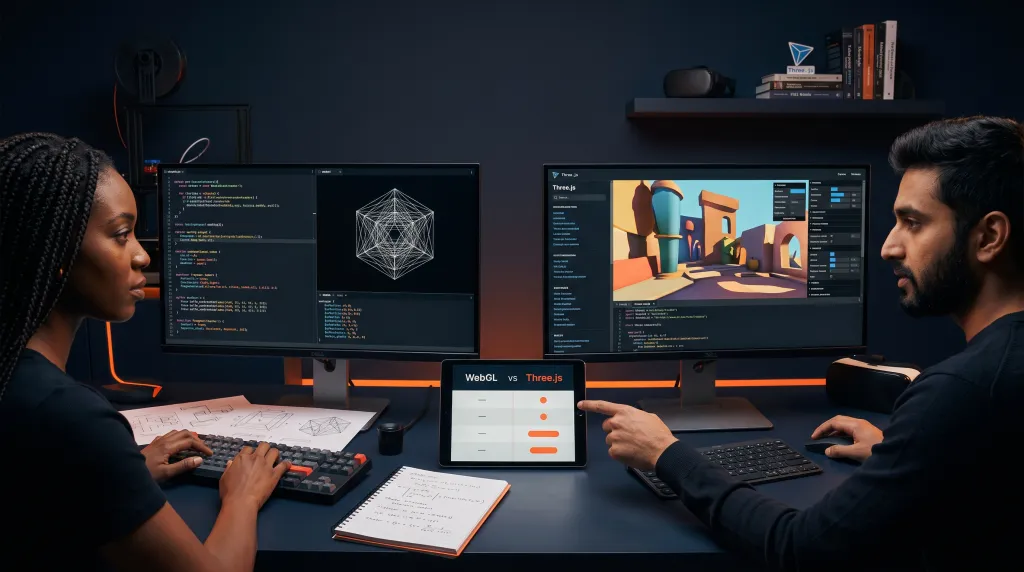
- Technology stack and future-proofing: Whether the agency favors Three.js, native WebGL, or proprietary engines, the tech stack impacts maintainability and extensibility. Deeply vet their rationale, does it align with your performance, security, and scaling needs? For a technical breakdown, consult the WebGL Vs Three.js guide.
- Proof of capability: Don’t rely on portfolio screenshots. Demand live, interactive references, ideally, projects that resemble your use case in complexity or sector. Ask about their prototyping process and how quickly you can see working demos.
- Support and longevity: Luxury agencies should offer clear post-launch support, including bug fixes, performance monitoring, and upgrade paths. Without this, even the most stunning site can degrade over time.
- Compliance and accessibility diligence: For regulated or global brands, the agency must proactively test for compliance (GDPR, ADA, etc.) and deliver accessible experiences. This is especially complex in 3D sites where non-standard interactions can block users with assistive needs.
Ask for transparency on project methodology, team composition, and escalation paths for issues. Agencies that hesitate or generalize likely lack the maturity to deliver at a luxury standard.
Another significant decision is the agency’s approach to design system integration. Luxury agencies often extend or build new design systems so that 3D components are consistent with the brand’s broader digital ecosystem. This ensures scalability and a consistent user experience, even as new features and pages are added post-launch.
For global and multi-lingual brands, verify the agency’s experience with localization and internationalization of interactive content. 3D scenes and UI elements must adapt smoothly across languages, currencies, and regulatory environments, which requires foresight in both design and engineering from the start.
Related posts: Explore the impactful role of immersive 3D web design for premium brands in our immersive 3D web design services overview.
Risks and Tradeoffs: Where Luxury Web Design Projects Fail
Even the most capable luxury web design agency faces unique risks and tradeoffs in 3D website builds. Understanding these is essential for buyers who want to avoid costly overruns or underwhelming launches.
- Performance bottlenecks: High-fidelity 3D and video can cripple site speed, especially on mobile networks. Luxury agencies counter this with rigorous asset optimization, progressive enhancement, and fallback pathways, but every added layer of detail increases complexity and test requirements.
- Scope drift and budget overruns: Rapid prototyping and multiple stakeholders can cause features to proliferate. Disciplined agencies set clear milestones, lock requirements before each sprint, and communicate tradeoffs transparently. Insist on regular budget and scope reviews.
- Post-launch support gaps: Some studios focus on the build, then disappear. A true luxury partner defines and documents ongoing support, including SLAs for bug fixes, monitoring, and strategic updates. Without this, your investment is at risk post-launch.
- Compliance and accessibility failures: Complex 3D interfaces can easily block screen readers, keyboard navigation, or create regional compliance issues. Luxury agencies should embed accessibility checks and legal audits into every release cycle.
- Internal team alignment: The higher the ambition, the more critical it is that your agency collaborates closely with in-house marketing, compliance, and IT. Misalignment here is a leading cause of project slowdowns or post-launch regret.
Some additional tradeoffs emerge when working with a luxury web design agency. For instance, custom 3D development can extend timelines compared to template-driven projects. The benefit is uniqueness and precise brand fit; the risk is increased project complexity. Budget overruns can occur if stakeholders lack discipline in feature requests or change scope mid-project. Agencies that offer fixed-bid pricing with clear exclusions and change management protocols help mitigate this risk.
Security is another area of concern. Luxury projects often attract more attention, including from malicious actors. Agencies focused on the high end should provide solid security audits and ongoing vulnerability monitoring, especially if the 3D experience involves user data or transactional flows.
The best agencies will highlight these risks, along with mitigation strategies, during early discussions. If the team avoids these topics or can’t provide case studies of how they resolved similar challenges, consider it a warning sign.
Concrete Examples: Luxury Agency Practices in Action
What does this look like in reality? Consider a luxury web design agency working for a global SaaS brand:
- The agency prototypes a 3D onboarding experience using Three.js, sharing live links for stakeholder review within 72 hours.
- The team benchmarks performance on mid-range Android and iOS devices in Asia, Europe, and North America, not just flagship phones in the US.
- Accessibility consultants review each interactive element for ARIA compliance and keyboard navigation, flagging required changes before launch.
- Compliance specialists ensure that analytics and user data flows meet GDPR and sector-specific regulations.
- After launch, a dedicated support squad monitors uptime, user analytics, and performance metrics, deploying hotfixes as needed to preserve the premium user experience.
- When launching an interactive product explorer for a luxury retail brand, the agency coordinates with in-house merchandising and IT to integrate inventory APIs, real-time pricing, and geo-targeted promotional overlays, all within a performant 3D canvas.
- A luxury agency may also deliver a bespoke CMS for managing 3D scene content, enabling the client’s marketing team to update products or narratives seasonally without developer intervention.
These are not just best practices, they are baseline expectations for a luxury web design agency in 2026. The emphasis is always on custom solutions, measurable performance, and a long-term view of digital brand value.
Your Next Step: Commissioning a Luxury 3D Web Project
Choosing the right luxury web design agency is about engaging a partner with demonstrable technical mastery, process discipline, and a commitment to long-term brand value. Before signing, demand proof: live demos, transparent methodologies, and clear support roadmaps. If you’re ready to build a distinctive, high-impact 3D digital experience, connect with MDX’s immersive 3D web design team for a transparent, tailored project scoping conversation. Don’t leave your next brand milestone to chance, see what a difference true luxury expertise makes.