
Selecting the best Three.js development agencies for your next high-stakes 3D web project goes far beyond picking the team with the most jaw-dropping demo…
Best Three.js Development Agencies: How to Spot Real Capability (and Avoid Costly Mistakes)
Selecting the best Three.js development agencies for your next high-stakes 3D web project goes far beyond picking the team with the most jaw-dropping demo. In 2026, as immersive and interactive 3D experiences become a core part of digital brand and product strategy, the decision to partner with a Three.js agency can be pivotal. The difference between a smooth launch and a costly post-release fire drill often comes down to the agency’s technical rigor, integration mindset, and their ability to anticipate real-world constraints. Below, we explain the concrete capabilities, risk factors, and evaluation criteria that separate genuine Three.js expertise from impressive showreels.
What Sets the Best Three.js Development Agencies Apart
The top Three.js agencies distinguish themselves by more than creative prowess. Their value is proven by solid technical execution, relentless production optimization, and a nuanced understanding of integration challenges. Key attributes include:
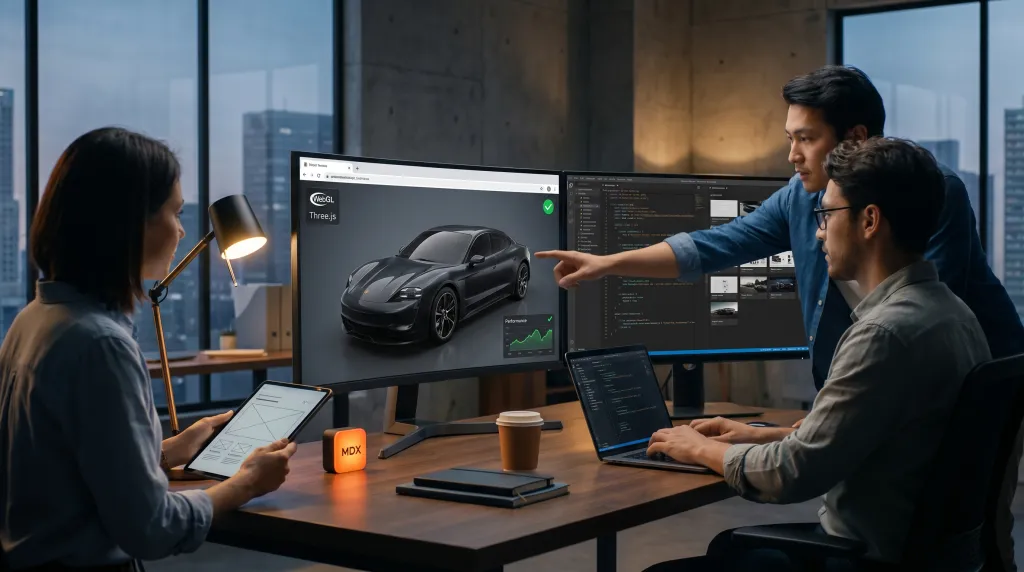
- Consistent, device-agnostic performance: Agencies worth trusting test beyond the latest MacBook. They target 30, 60fps on mid-range Android, iOS, and older laptops, and they do it with real users in mind.
- End-to-end asset optimization: From mesh decimation and GLTF/GLB pipeline tuning to WebP texture compression, the best teams bake performance into the workflow. Expect them to show before-and-after asset metrics and explain each optimization choice.
- Integration with modern frameworks: True leaders don’t just ship standalone Three.js builds. They wire up 3D scenes inside React, Next.js, or your chosen stack, ensuring seamless routing, state management, analytics, and accessibility.
- Resilient fallback strategies: Production-grade agencies never leave non-WebGL users hanging. They implement graceful fallbacks, static images, lightweight SVGs, or custom error states, ensuring the experience remains brand-safe regardless of device.
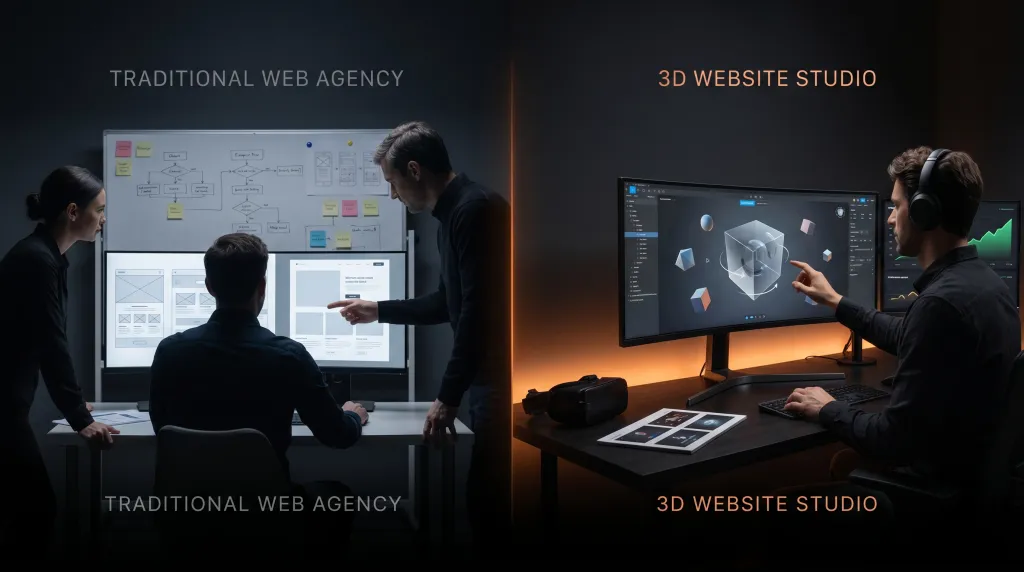
- Cross-disciplinary collaboration: The best results come from teams that blend UI/UX, frontend, motion design, and 3D engineering. This reduces handover friction and ensures accessibility, marketing, and technical constraints are addressed from day one.
Instead of asking for generalized portfolios, request details on how agencies have handled scaling, device diversity, and real-world integration. Teams that can articulate their approach to versioning, code reviews, and asset pipelines are far more likely to deliver under pressure.
Related decision: Still weighing technology options? WebGL Vs Three.js: Which Technology for Your 3D Website? unpacks when to use each approach based on project scale and team skills.
Key Tradeoffs When Choosing a Three.js Partner
The choice of agency has cascading effects on maintainability, project risk, and long-term ownership. Here’s where the tradeoffs play out:

- Standalone vs integrated codebases: Standalone Three.js bundles are fast to demo but rarely fit into production React, Next.js, or CMS-driven sites without costly rewrites. Integrated builds allow for unified routing, analytics, and SEO, but require deeper technical skills.
- Proprietary tooling vs open standards: Agencies that use their own wrappers or non-standard code patterns can make you dependent on their team for every update. Look for adherence to open Three.js patterns, and insist on codebase documentation and handover protocols.
- Transparency in pipeline and process: Can the agency explain their CI/CD setup, testing regimen, and asset pipeline? Teams that automate build and deployment can deliver updates safely, while manual pipelines introduce delays and error risks.
- Team structure and resource depth: Boutique shops are nimble, but may lack redundancy if a key engineer leaves. Larger agencies bring more process, but can introduce communication bottlenecks. Ask about escalation paths and team continuity guarantees.
- Cost vs future flexibility: Cheaper agencies may skip steps like fallback implementation or accessibility audits, leading to higher costs post-launch. Weigh upfront cost savings against the risk of technical debt and support headaches.
When interviewing candidates, probe for details on their build and release process, code review policy, and how they handle third-party library updates. This exposes whether their workflow is designed for one-off demos or solid, updatable production code.
How to Vet Agencies for High-Stakes 3D Projects
For strategic 3D web initiatives, your vetting process must go beyond surface-level screening. Use these operational steps to separate real capability from sales polish:
- Run live project audits: Demand access to live, production URLs, not just videos or local demos. Test these on a range of browsers, devices, and network speeds. Measure actual load times and frame rates using browser profiler tools.
- Technical interviews with implementers: Don’t settle for pitches from agency executives. Insist on meeting the engineers who will deliver your project. Quiz them on asset pipelines, Three.js versioning, and fallback strategies.
- Open-source and community involvement: Agencies that contribute to Three.js libraries, publish technical articles, or maintain GitHub repos generally have deeper, more up-to-date expertise. Ask for links and specific contributions.
- Stress-test their samples: Load portfolio projects on low-powered Android or iOS devices. Attempt to break the experience, resize windows, throttle network, enable accessibility tools. See how gracefully the experience degrades.
- Request codebase access (under NDA): For flagship projects, ask to review a sanitized version of a production codebase or a technical design document. Look for modular structure, documentation, and adherence to open Three.js conventions.
- Evaluate communication and project management tools: Agencies that use transparent project tracking (Jira, Trello, or Notion) and maintain open communication channels are more likely to surface blockers before they escalate. This reduces delivery risk and keeps stakeholders aligned.
Vetting is about risk reduction. If an agency can’t clearly explain their approach to optimization, device support, or integration, consider it a warning sign. Even small issues, like lack of automated asset compression or missing ARIA labels, can spiral into major post-launch costs. It’s also wise to ask about their approach to QA, staging environments, and how they handle real-user testing prior to launch.
Structured vetting not only prevents costly surprises but also gives you a clear signal of how the agency will handle unknowns during the project lifecycle. In an environment where browser standards and device capabilities continue to evolve rapidly, real-world testing and proactive technical communication make the difference between a one-off demo and a sustainable, maintainable 3D web platform.
Failure Modes: What Goes Wrong with 3D Web Agency Projects
Even top agencies stumble without rigorous process. Common failure patterns to watch for:

- Performance collapses under real traffic: Demos are often profiled on high-end hardware, but production traffic exposes memory leaks, unthrottled animation loops, and asset bottlenecks. If the agency hasn’t stress-tested at scale, you’re at risk.
- Integration oversights: Projects frequently miss deadlines when agencies underestimate the complexity of integrating with authentication, analytics, or content management systems. The best agencies flag these dependencies early and prototype integrations up front.
- Post-launch maintainability pain: Non-standard code, poor documentation, or custom wrappers make it hard to update scenes, fix bugs, or switch vendors. This leads to expensive rewrites or vendor lock-in.
- Hidden infrastructure and support costs: Asset bloat and missing fallback strategies drive up CDN bills and support tickets. This can eat into ROI long after the initial launch.
- Accessibility failures: Lack of ARIA, keyboard navigation, or alternative content can render 3D experiences unusable for a segment of your audience, exposing you to legal and reputational risk.
- Inadequate versioning and technical debt: Some agencies skip solid version control or neglect dependency management, leading to brittle deployments. If your chosen partner can’t demonstrate a reliable upgrade path as Three.js evolves, expect escalating maintenance costs and potential security issues.
To mitigate these issues, require agencies to demonstrate performance monitoring, fallback behaviors, and accessibility support in staging environments, not just at the final handoff. Build these requirements into your statement of work and ensure there are acceptance criteria for device coverage, scalability, and accessibility.
Related posts: For more on making 3D experiences production-ready, see how to build immersive 3D web experiences that actually perform.
Benchmarks and Real-World Examples
Public benchmarks set a high bar for Three.js agencies in 2026. The best partners consistently achieve:
- Sub-2-second initial load times for complex interactive scenes (with progressive asset loading and code splitting).
- Stable performance (30, 60fps) across mainstream mobile and desktop hardware, with clear metrics from tools like Lighthouse and WebPageTest.
- Seamless integration with React, Next.js, or SvelteKit, demonstrated by live routes, hot module reloading, and unified analytics.
- Accessible, maintainable codebases, evidenced by repeat client projects, open-source releases, and handover documentation.
- Graceful degradation for non-WebGL browsers, so all users get a branded experience.
- Documented upgrade paths and modular architecture: Agencies should provide clear documentation on updating dependencies, handling Three.js version changes, and supporting modular scene composition. This ensures that your 3D experience remains maintainable and secure as frameworks evolve.
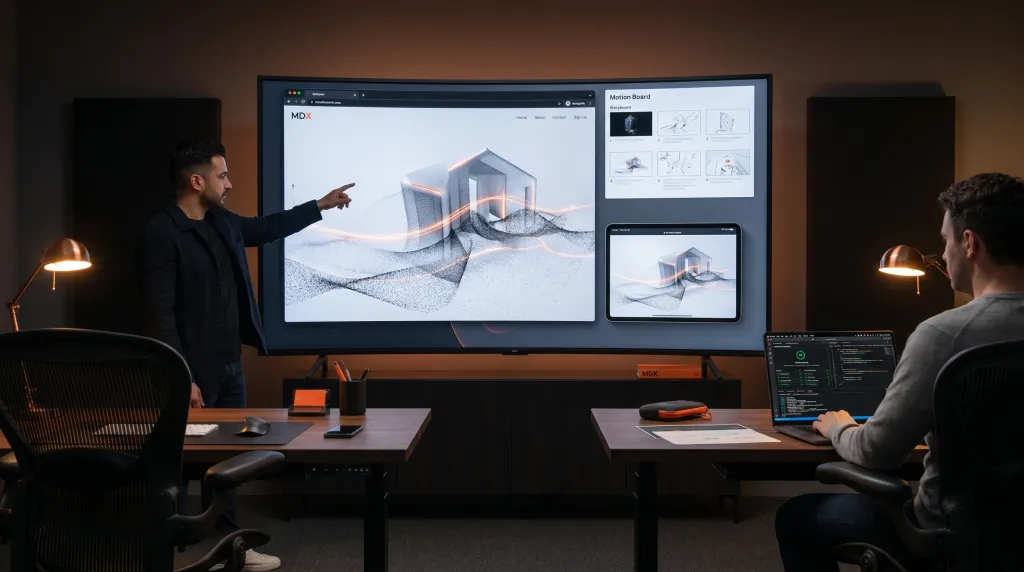
For a real-world sense of this capability, browse the MDX 3D and interactive web project examples. These projects showcase what happens when agencies prioritize production readiness and ongoing maintainability, not just visual novelty. Look for evidence of how these projects scale over time, handle new feature requests, and adapt to browser or device changes post-launch.
In addition to public case studies, ask agencies for client references willing to discuss long-term experience and support quality. A true top-tier agency will have repeat clients and a transparent record of technical problem-solving, not just flashy launches.
If your team needs a partner versed in both the technical and business side of immersive 3D web, MDX provides immersive 3D web design services that blend creative, frontend, and 3D engineering into a unified, future-proof delivery workflow.
Conclusion: Choosing Real Capability Over Demos
In 2026, the demand for high-impact 3D web experiences is only growing, but the risks of picking the wrong Three.js agency are bigger than ever. The best Three.js development agencies expose their process, share technical detail, and prove their results with live, production-quality work. Prioritize agencies that demonstrate cross-stack integration, solid asset management, and a collaborative approach spanning design, frontend, and 3D engineering.
Don’t let your project be a casualty of the demo-driven sales cycle. Demand evidence of production readiness, technical transparency, and real-world delivery. Ready to see how real capability transforms risk into a competitive advantage? Schedule a call with MDX to discuss your Three.js project, and move your digital brand into the next dimension.