
Too many so-called "high end web design" projects burn through six-figure budgets only to launch underwhelming 3D experiences that feel laggy, look beautiful…
High End Web Design: What Sets Exceptional 3D Websites Apart (and Where Projects Fail)
Too many so-called “high end web design” projects burn through six-figure budgets only to launch underwhelming 3D experiences that feel laggy, look beautiful on paper, but ultimately miss the mark for real users and business objectives. The difference between a showpiece and a sales driver isn’t just about visual polish, it’s about how technology, interaction, and business logic work together under real-world constraints. If you’re commissioning or running a premium 3D website project in 2026, knowing what truly sets the best apart (and where most fail) is the only way to avoid expensive, embarrassing missteps.
Defining High End Web Design in a 3D Context
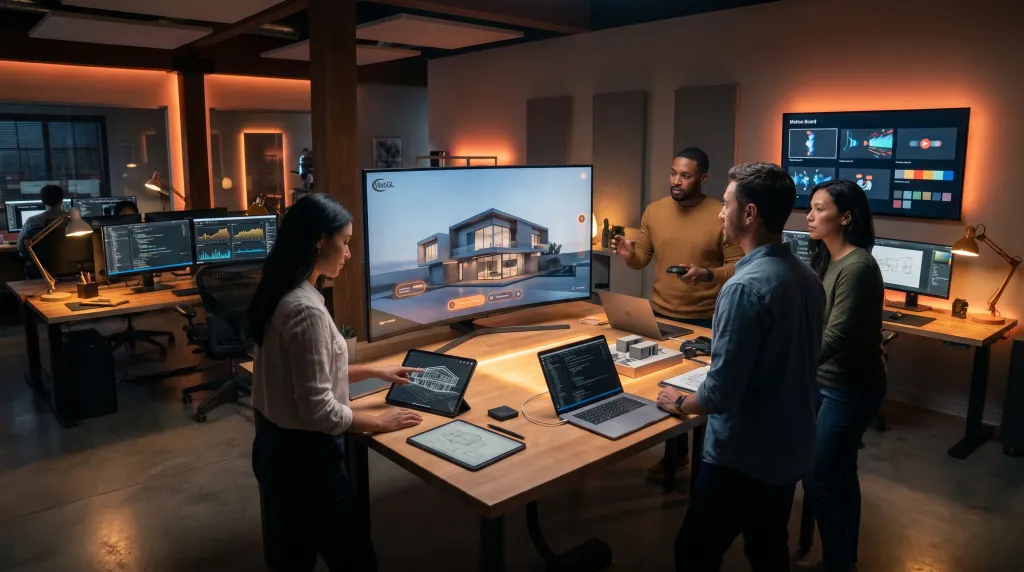
“High end” in 3D web design means more than glossy graphics. Premium 3D websites are defined by immersive, interactive experiences that measurably move the needle for the business. Clients expect not just beauty, but ROI from features: product configurators that drive conversions, real-time demos with analytics, and branded storytelling that users remember. This goes far beyond template-driven design or static animation.
Technical benchmarks matter: Seamless performance across devices, instant loading, and snappy interactions are non-negotiable. High end also means custom 3D assets tailored to the brand, not just stock models or off-the-shelf effects. Integration with live business data, think real-time inventory, pricing, or user customization, is increasingly the expectation, not the exception.
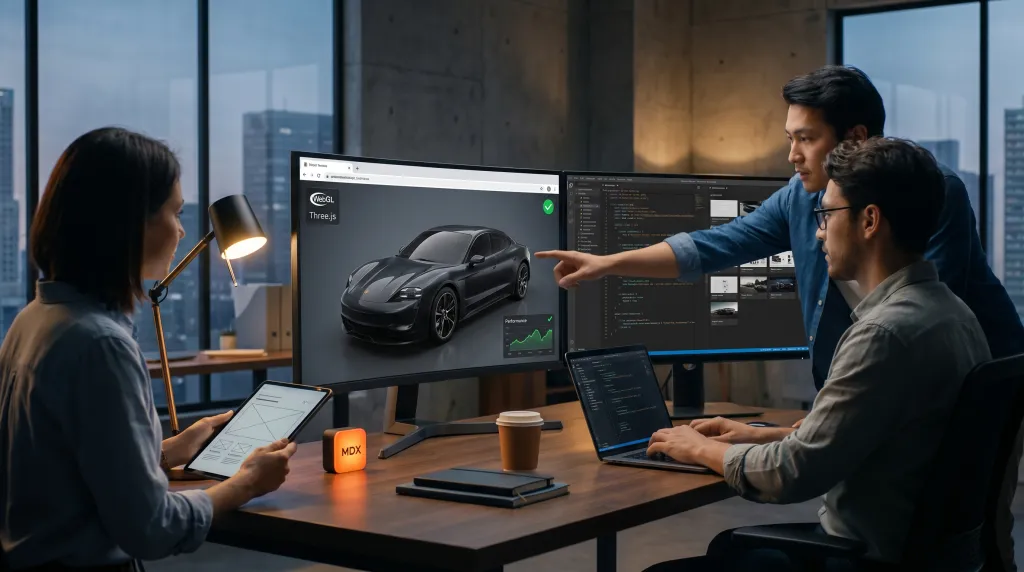
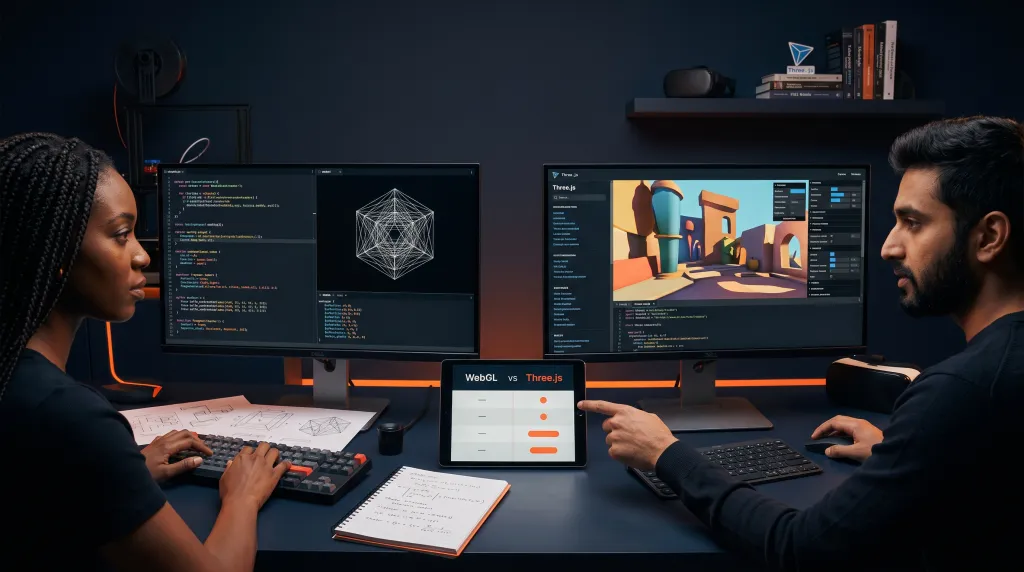
- Advanced WebGL and Three.js implementations power most standout 3D work.
- Accessibility and legal compliance are now baseline requirements, not afterthoughts.
- Business stakeholders demand clear metrics: engagement, conversion, and lead gen are tracked from day one.
What truly distinguishes high end web design in 2026 is the focus on business outcomes. Design teams are expected to collaborate with marketing, product, and even legal to define what success looks like, from increased qualified leads to reduced onboarding friction. Agencies must be as fluent in KPIs as they are in shaders, and technical teams are expected to build analytics hooks directly into interactive features.
Related decision: For a deeper technical dive on execution, see WebGL Website Design.
Execution Levers: What Actually Elevates a 3D Website
Getting to “high end” status in 2026 means mastering a handful of difficult, often invisible levers. First are bespoke 3D assets: custom modeling and animation that reinforce the brand story, not just generic spinning objects. These assets must be optimized for real-world performance, especially as users access sites on everything from gaming PCs to aging tablets.

The second lever is seamless motion design. Subtle transitions, real-time physics, and interactive feedback are what separate a premium experience from a clunky one. Animations must be both beautiful and performant; overly complex motion will tank device compatibility, yet underwhelming movement leaves users cold.
Third is frontend engineering discipline: leveraging progressive loading, asset streaming, and adaptive rendering to ensure that even heavy 3D sites feel fast. This is where many agencies lose their edge, beautiful Figma prototypes fall apart without world-class frontend talent and ruthless optimization.
The final lever is tight integration with business logic. Whether it’s a real-time product demo, a data-driven configurator, or CRM-connected lead forms, high end buyers want 3D sites that do something, not just look impressive. Immersive 3D web design services now routinely include custom dashboards and analytics hooks to prove ROI.
Buyers should push for transparency around these levers. Ask for breakdowns of how 3D models are created and optimized: polygon counts, texture baking, and LOD (level of detail) strategies are not just technical trivia, they directly affect load times and cross-device performance. Demand walkthroughs of animation pipelines and how motion is tied to user input. Request real-world device testing matrices, not just simulated benchmarks on agency hardware. Finally, insist on seeing backend integrations in action, not just in spec sheets.
High end web design projects also increasingly prioritize progressive enhancement: the experience must gracefully degrade for users on less powerful hardware. For example, a luxury automotive configurator might offer a full 3D experience on desktop, but automatically switch to photorealistic images and simplified controls for low-end mobile browsers. This requires real engineering discipline and a nuanced understanding of user segments.
Implementation Risk: Where Premium 3D Projects Fall Short
Even large-budget projects routinely hit the wall in a few predictable ways. The most common failure mode: late-stage changes to animation flow or 3D fidelity that balloon costs and timelines. Scope creep, especially when clients don’t fully grasp the technical cost of small visual tweaks, can derail even the most disciplined teams.
Scope management is not just project management overhead; it’s risk mitigation. Experienced agencies set granular, visual sign-off points for each milestone: wireframes, low-poly model previews, final animation passes. Change requests after these points trigger clear budget and timeline adjustments, not vague promises.
Device performance headaches are a close second. What looks flawless on an agency’s high-end MacBook can grind to a halt on an older Android tablet. Without rigorous device testing and performance budgets baked into the process, sites launch with glaring compatibility gaps that frustrate users and damage the brand.
Accessibility and legal compliance are still, in 2026, too often left to the last minute. Retrofitting ARIA labels, keyboard navigation, and color contrast fixes into a finished 3D experience is difficult and expensive, and non-compliance can trigger lawsuits or regulatory headaches, especially for global brands. The risk isn’t theoretical: accessibility lawsuits targeting immersive web experiences are rising, and regulators are starting to focus on advanced interaction patterns. The best agencies run accessibility audits as part of every sprint, not just a final checklist.
Finally, the hidden cost of change requests: even “minor” animation or interaction tweaks can require re-exporting models, rewriting shaders, or refactoring entire rendering pipelines. Agencies that don’t set clear boundaries and change control processes up front risk burning profit and goodwill before launch.
Another overlooked risk is integration fragility. When 3D configurators or demos are tightly coupled to external systems (ERP, inventory, or pricing APIs), small backend changes can break the frontend experience. Smart teams build in health checks, fallback states, and solid error reporting so the 3D layer never fails silently.
Related posts: For a realistic breakdown of budget drivers, read 3D Website Development Cost.
Related Decision: When High End 3D Design Is the Wrong Move
Not every product or audience is a fit for immersive 3D. If your users are mobile-first on slow connections, or your product doesn’t benefit from tactile exploration, high end 3D may be wasted effort. In fact, over-investing in advanced visuals can actively harm usability for some segments, especially if accessibility or speed are core requirements.

Budget is another brutal filter. Premium 3D design is expensive by nature: custom modeling, animation, and performance engineering aren’t commodities. If your project can’t support iterative prototyping, device testing, and solid support, a simpler, but still well-crafted, solution will deliver better ROI.
Ask before committing:
- Does your business gain from interactive demos or configurators, or is storytelling the main goal?
- Will users reliably access the site on modern hardware?
- Is there a meaningful way to measure business outcomes, leads, conversions, engagement, from 3D features?
If the answer is “no” to any of these, focus on clarity, speed, and accessibility instead. For products with a simple value proposition or non-visual differentiation, a beautifully executed 2D site will outperform a heavy, confusing 3D experience. High end web design is about deploying the most impactful medium for your audience, not chasing trends.
Commissioning High End Web Design: Process and Proof Points
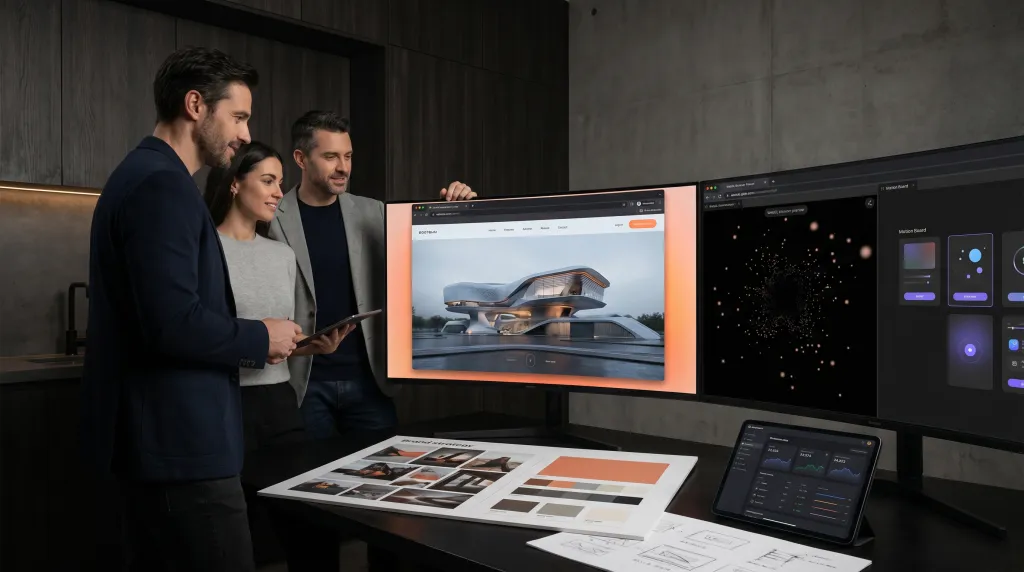
Top agencies start with deep discovery and prototyping. Client teams are walked through interactive wireframes and low-fidelity 3D mockups before any heavy production work begins. This is where business logic, not just visuals, gets validated, configurators, forms, and integrations are mapped to real requirements, and sign-off is locked before animation or modeling ramps up.
Stakeholder reviews are frequent and structured: video walkthroughs, device testing sessions, and recorded user feedback rounds ensure that surprises are surfaced early. When change requests do arrive, they’re funneled through a documented scope management process, which protects budget and timeline. Agencies that skip this rigor end up with expensive overruns or unfinished features.
Post-launch, proof points matter. Analytics dashboards track engagement with 3D features; business teams can see in real-time whether users are interacting with configurators, demos, or other premium elements. The best firms offer ongoing optimization cycles, tuning performance, adding features, and adjusting business logic as user patterns emerge.
Buyers should demand detailed reporting on actual user behavior, not just global traffic but granular data on how users interact with 3D scenes, where drop-offs occur, and which features drive conversions. This data should feed directly into product and marketing decisions, closing the loop between design, engineering, and business goals.
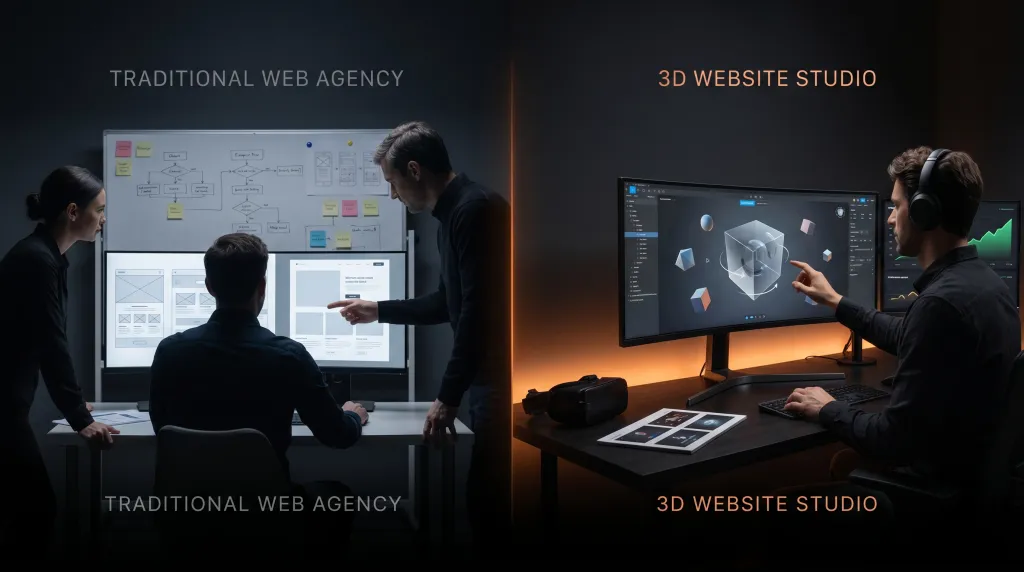
For organizations commissioning high end web design for the first time, review live case studies and reference calls. Ask to see not just finished sites, but documentation of the process: sprint plans, prototyping artifacts, and post-launch optimization cycles. Transparency here is a litmus test, agencies that struggle to show their process usually struggle to deliver on complex, premium work.
To see real examples of what this process delivers, explore MDX 3D and interactive web project examples.
Ready to commission a site that actually delivers? Talk to MDX about immersive 3D web design services, from prototype to launch to optimization, we keep high end projects on target and on budget.