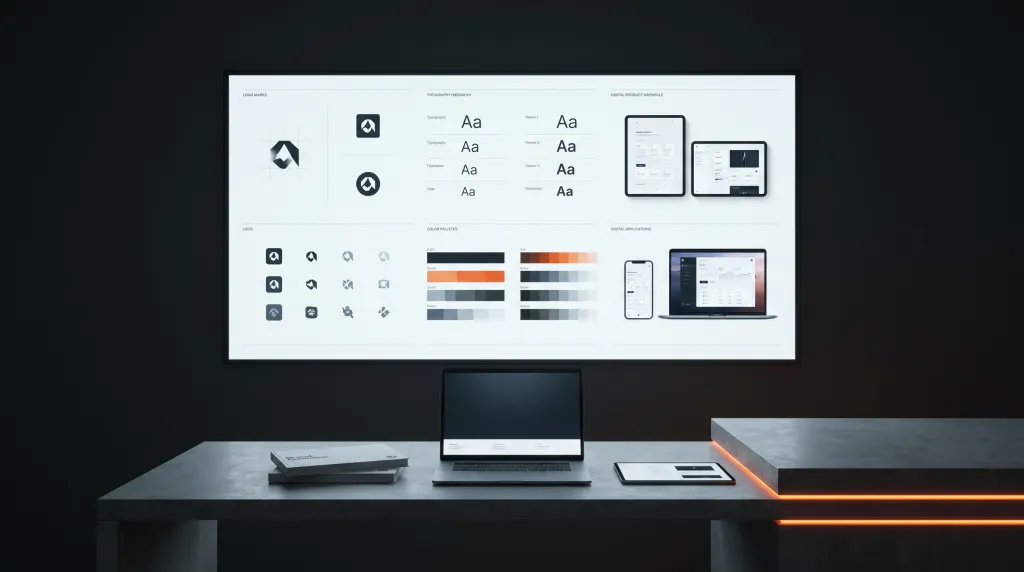

Selecting a SaaS branding agency is a decision that carries both strategic and technical weight. See our portfolio →
SaaS Branding Agency: How to Avoid Common Pitfalls and Find True Product-Minded Partners
Selecting a SaaS branding agency is a decision that carries both strategic and technical weight. While many founders believe branding is about logo updates or a fresh color palette, the reality is that SaaS brands demand far more: deep technical integration, UX fluency, and the ability to translate complex product value into an experience that converts. A misstep here isn’t just a cosmetic issue, it often leads to generic visuals that break within your app, onboarding friction that drives up churn, or a heavy website that quietly tanks your conversion rates.
What Sets a SaaS Branding Agency Apart. And Where Most Miss
Generalist branding agencies may produce beautiful style guides and clever logos, but SaaS companies need more than a visual facelift. A high-performing SaaS branding agency knows that brand is inseparable from digital experience. Your homepage, onboarding flow, and even the smallest in-app microinteractions collectively become a living demo of your product’s value. The best agencies deeply understand this intersection of storytelling and technology.
Where most agencies miss: Many treat SaaS branding as a thin visual layer. They hand over stunning Figma files but overlook crucial factors like compatibility with complex dashboards, how color choices affect accessibility in dense UI states, or how animation loads in a real browser under production traffic. This oversight leads to brand assets that look sharp in isolation but frustrate engineers, slow down user flows, or clash with actual product screens.
A true SaaS branding partner will:
- Probe your product’s onboarding flow and ask about first-run user friction.
- Insist on seeing your current app UI to ensure new assets fit natively, not just on marketing pages.
- Challenge you on web performance, prioritizing lightweight, accessible visuals over visual bloat.
- Anticipate handoff issues by involving your technical and UX teams throughout the process.
Teams who skip these steps tend to deliver surface-level polish, ignoring the operational realities of SaaS brands. The result is a disconnect between marketing promise and in-product experience, which can quietly erode user trust or slow down onboarding.
Related decision: For a deeper look at how SaaS branding requirements diverge from B2B or B2C, see Branding Types: Choosing the Right Framework for Your Startup.
Decoding Agency Promises: Visual Innovation vs. Practical Execution
It’s easy to be dazzled by portfolios full of motion graphics and interactive demo sites. But in SaaS, visual innovation is only as valuable as its technical execution. A homepage animation that impresses on desktop but tanks mobile speed, or interactive demos that break in production, can sabotage your onboarding funnel.

Operational detail: Ask a prospective agency to walk you through a live SaaS site they’ve branded. Do their interactive elements load quickly? Are they built with scalable tech (e.g., Three.js, WebGL) and do they gracefully degrade on slower devices? Does the agency have a process for measuring performance impact, like Lighthouse scores or real user monitoring, during design and after launch? These details matter when your product’s first impression is on the line.
Buyers should:
- Ask for case studies where interactive demos improved (not hindered) signups or trial conversion.
- Request to see how the agency handles technical handoff: do they provide reusable React/Vue components, or just static assets?
- Probe for examples of how they tested accessibility, mobile rendering, and frontend integration.
- Look for agencies that plan for ongoing support, not just a one-time handoff. SaaS products evolve, brand assets must, too.
A strong SaaS branding agency won’t just talk about visual trends, they’ll explain how their work supports your product’s technical goals and load times. They should articulate how brand strategy maps to engineering realities, because even a groundbreaking brand identity can fail if it stalls your product’s core flows.
“We’ve seen SaaS brands tank conversion because their homepage demo, built for visual punch, loaded 8MB of assets and killed mobile performance. The agency never asked for real user metrics or app context.”
Don’t settle for vague assurances. Push for specifics about how branding choices affect both engineering and user engagement. The best agencies will have answers grounded in real outcomes, not just design rhetoric.
Implementation Risks and Common Failure Modes in SaaS Branding
Even with a talented agency, SaaS branding projects frequently go off the rails. Understanding these risks, and how to avoid them, can spell the difference between a brand that accelerates growth and one that undermines it.

Misaligned Messaging: Many SaaS brands fall into the trap of mimicking design trends from “top SaaS” companies, leading to visual sameness. This approach risks diluting your unique value proposition, making it harder for prospects to grasp why your product is different. A strong SaaS branding agency will push for clarity and differentiation, not just aesthetics.
Operational tradeoff: Over-indexing on trendiness can backfire if your customer segment values clarity and simplicity over visual flair. Balance is key.
Asset-Product Disconnect: A frequent failure mode is the handoff between design and engineering. When agencies design isolated visuals without considering the constraints of real product UIs, like crowded dashboards or permission-based states, developers waste cycles reworking assets or, worse, introduce inconsistencies into the app. Always ensure your agency understands your frontend stack and product workflows.
Performance Bottlenecks: Interactive demos and 3D effects can distinguish your brand, but they also carry risk. Heavy animations, excessive JavaScript, or poorly optimized images can create hidden friction, especially on mobile or in global markets with slower networks. Few agencies proactively test for this. Insist that performance testing is part of the process.
Implementation example: One SaaS client integrated a WebGL-powered onboarding tour, but failed to test it on older iPhones. The result: a spike in bounce rates from mobile users, traced back to the onboarding experience crashing on underpowered devices. The fix required both technical refactoring and a rethinking of visual priorities, a costly, avoidable mistake with the right agency.
Invisible risk: Many SaaS branding initiatives overlook the operational load of maintaining complex assets. If your branding depends on interactive graphics, ask agencies how updates and bug fixes will be managed. Is there a clear process for updating assets as your product evolves? Neglecting this can slow product sprints or leave your brand looking outdated within a year.
Related posts: For more on how founder-led branding efforts can falter and when to bring in specialists, see Startup Branding Agency: When to Outsource and What to Demand.
Related Decision: When to Prioritize Brand Over Product Features in Early SaaS Growth
The sequencing of brand investment versus feature development is a persistent question among SaaS founders. In 2026, with markets more saturated and buyers more skeptical, brand differentiation is often the lever that earns you a seat at the table, but only when your product is ready to deliver on the promise.
Concrete signals to prioritize branding:
- You’re in a category with feature parity and must stand out through story and trust.
- Your sales cycles hinge on first impressions, credibility, and clear messaging.
- Your product’s value is difficult to communicate in a demo or through specs alone.
When to defer: If your product is still pivoting, or you haven’t validated core user flows, heavy investment in branding may mean costly rework later. Instead, focus resources on refining feature-market fit and use lightweight branding as a placeholder.
Practical advice: The most successful SaaS launches in 2026 time brand investment to coincide with market-readiness. They use brand work to amplify positioning, not to cover up product gaps. When considering a branding agency, look for teams who understand the timing tradeoff and are willing to phase their deliverables accordingly.
Related decision: For founders looking to clarify the interplay between branding, product management, and funding milestones, see the practical frameworks in Branding Types: Choosing the Right Framework for Your Startup.
How to Vet a SaaS Branding Agency: Signals in Portfolios and Conversations
Finding a SaaS branding agency that truly fits your needs means looking beyond surface polish. You want proof points of technical integration, product understanding, and performance discipline. Here’s how to dig deeper:
- Portfolio audit: Do they showcase interactive site experiences (Three.js, WebGL, live data), not just static visuals?
- Are brand assets shown inside real product UIs, think dashboards, onboarding screens, or permissioned states?
- Case studies: Look for detailed write-ups describing how branding improved onboarding, reduced demo friction, or impacted conversion metrics. Bonus points for metrics and before/after comparisons.
- Do they discuss performance optimization, accessibility, and frontend implementation in their process?
In agency conversations, listen for:
- Questions about your product flows, technical stack, and integration constraints.
- Discussions on how brand elements map to actual user journeys.
- Willingness to involve your engineers or product managers early and often.
- References to brand identity and startup branding as it relates to product-led growth.
For a sense of what modern SaaS branding agencies deliver, explore recent MDX startup and brand project examples.
Quick buyer rubric:
- Does their portfolio include interactive product demos and not just static visuals?
- Can they articulate how their designs impact engineering and product teams?
- Do they discuss web performance, accessibility, and technical handoff in the sales process?
- Will they collaborate with your in-house devs and iterate on feedback?
- Have they demonstrated a process for updating and maintaining brand assets as your SaaS platform evolves?
If you want a SaaS branding agency that brings technical integration, product empathy, and a proven record of modern execution, start a conversation with MDX’s SaaS branding specialists today.
Related service: Branding Agency